
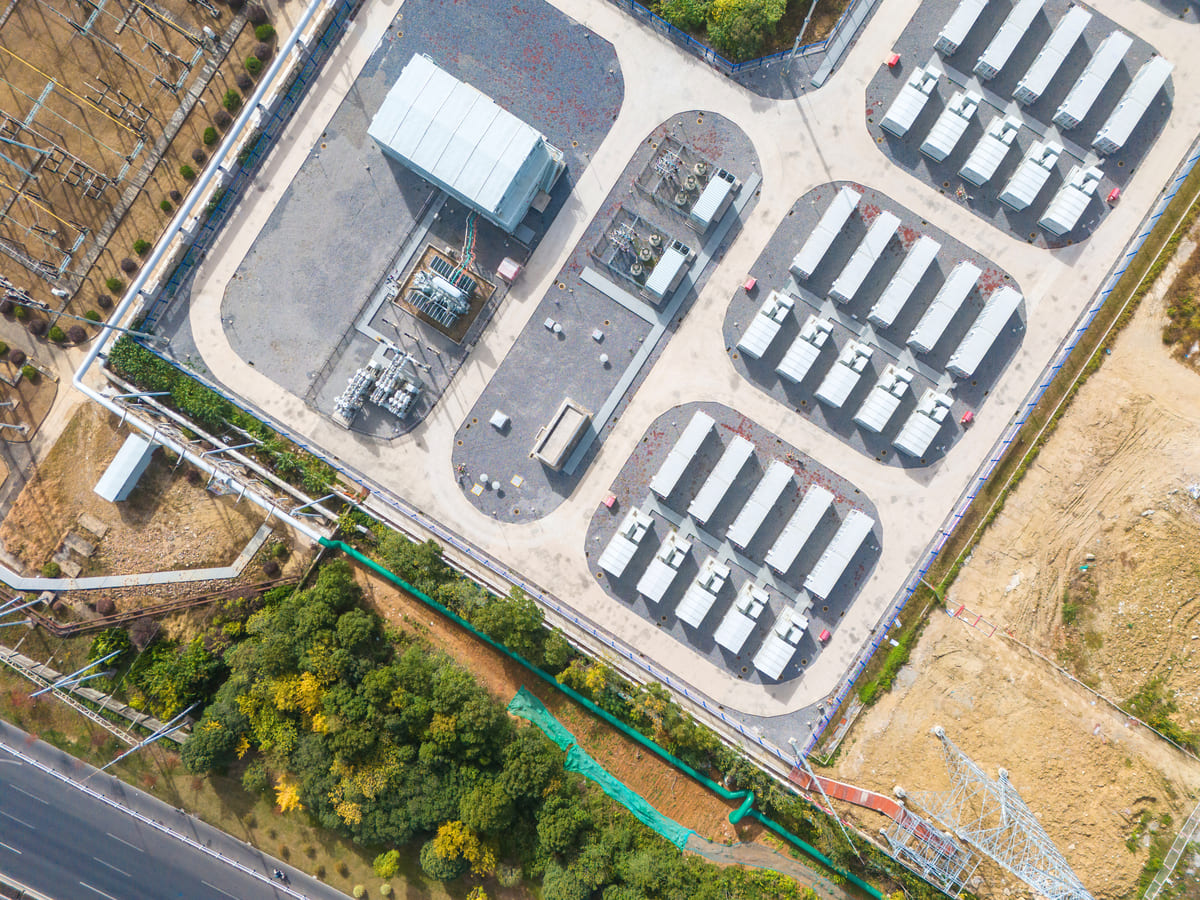
Grid-tied microgrids stay connected to the utility grid under normal conditions, while islanded microgrids operate independently and can supply power without any grid support. The most important takeaway is that grid-tied systems are financially efficient and leverage the grid for stability, while islanded systems maximize resilience by operating as fully independent power systems. Many facilities use a hybrid approach that remains grid-tied during normal operations but islands automatically when disturbances occur.
Choosing between the two requires understanding how your facility uses energy, how sensitive you are to outages, and whether you need continuous onsite generation. E-Finity designs microgrids that operate grid-tied for efficiency yet island seamlessly during utility faults. In several deployments, natural gas onsite generation systems supported uninterrupted operation even during multi-hour grid events, demonstrating the value of a hybrid configuration.
What a Grid-Tied Microgrid Is and How It Works
A grid-tied microgrid stays electrically connected to the utility grid at all times. It may generate some or all of your facility’s electricity, but it synchronizes with the grid and exchanges power as needed.
To do this, the microgrid’s control system maintains voltage, frequency, and phase alignment with the utility. When load spikes occur, the grid can supply additional power. When onsite generation exceeds load, the microgrid may reduce generation or export power if regulations allow.
Grid-tied systems work well when:
• You want to reduce costs through demand management
• You want generation flexibility without full isolation
• Your region has reliable utility infrastructure
General scenario: A 3 MW manufacturing site runs CHP at 2 MW baseload but occasionally draws from the grid during peak production hours. The grid-tied configuration allows cost optimization and grid support without requiring full islanding capabilities.
What Is CHP, and Why Its Efficiency Matters
Because CHP appears throughout this discussion, it is worth defining before we go further.
Combined heat and power (CHP), also called cogeneration, generates electricity on-site and captures the heat that would otherwise be thrown away, redirecting it to space heating, hot water, steam, or absorption cooling. That recovered heat is the reason CHP is central to microgrid economics.
A prime mover such as a microturbine typically converts 33 to 42 percent of its fuel into electricity. On its own, that is comparable to a central power plant. The difference is what happens to the rest of the fuel energy. At a central grid plant, roughly half of the fuel’s energy is lost as waste heat up the stack and through cooling, and more is lost in transmission before it reaches your building. A CHP system instead recovers that heat locally, pushing total combined efficiency to 75 to 85 percent.
On the 2 MW baseload site described above, the same natural gas that produces electricity also produces usable thermal energy for the facility’s process and comfort loads. Counting both the power generated and the heat recovered, the site turns far more of every fuel dollar into useful energy than it could by buying grid power and firing a separate boiler.
- 33–42%Typical electrical efficiency of an on-site CHP prime mover such as a microturbine
- 75–85%Total combined efficiency once the recovered heat is put to productive use
- ~50%Fuel energy lost as waste heat at a central grid power plant, before
What an Islanded Microgrid Is and How It Works
An islanded microgrid operates as a fully independent power system. It generates and regulates its own voltage and frequency, supplies its own inertia or synthetic inertia, and must be engineered like a miniature utility grid.
To do this, the microgrid must include:
• Firm generation, such as natural gas microturbines or engine generators
• Storage for transient response
• Controls that maintain stability under all conditions
• Protection systems that isolate internal faults
Islanded systems are chosen when the facility cannot tolerate any dependency on the utility or the utility cannot provide service to the facility in a reasonable timeframe. Data centers, hospitals, and mission-critical industrial sites often adopt islanding capability even if they remain grid-connected during normal operations.
General scenario: A coastal public safety complex models a 24-hour utility outage during storm season. The islanded microgrid carries all internal loads without drawing from the grid, eliminating generator start times and reducing outage risk.
Pros and Cons of Grid-Tied Microgrids
Pros:
• Lower capital cost because full islanding equipment is not required
• Access to utility support during peak demand
• Ability to export excess energy in regions with favorable tariffs
• Less complex protection and synchronization requirements
Cons:
• Vulnerable to utility voltage sags and frequency disturbances
• Cannot operate if the grid fails unless islanding capability is added
• Still subject to utility interconnection rules and restrictions
To evaluate whether grid-tied is appropriate, map your outage history and the cost of downtime. If outages are infrequent and non-critical, grid-tied may offer the right balance between cost and performance.
Pros and Cons of Islanded Microgrids
Pros:
• Full independence from the utility grid
• Highest reliability and resilience
• Ability to support critical loads during long outages
• Improved control over power quality
Cons:
• Higher capital cost due to additional controls, protection, and storage
• Requires firm generation sized for full load
•
• Requires thorough modeling of all operational scenarios
To evaluate islanding readiness, run load flow studies and resilience simulations. Facilities with expensive downtime often justify the additional cost through avoided outage risk.
Comparing Grid-Tied and Islanded Microgrids Side by Side
| Feature | Grid Tied | Islanded |
| Primary Benefit | Cost and flexibility | Maximum resilience |
| Dependency on Utility | High | None |
| Capital Cost | Lower | Higher |
| Power Quality Control | Shared with utility | Fully internal |
| Suitable For | Cost optimization | Mission-critical operations |
A hybrid configuration grid-tied with islanding capability often delivers the best balance. The microgrid operates daily in parallel with the grid but automatically islands when instability is detected.
How Hybrid Grid Tied with Islanding Capability Works
Hybrid microgrids maintain the financial efficiency of grid-connected systems while adding full islanding behavior for resilience.
To do this, the microgrid must:
• Run firm onsite generation continuously
• Maintain parallel synchronization with the grid
• Detect disturbances using protection relays
• Island instantly when required
• Resynchronize automatically when conditions stabilize
E-Finity deployments commonly use microturbines that carry baseload even when connected to the grid. At one Mid-Atlantic campus application, the microgrid detected a utility voltage collapse and islanded within under one second, maintaining 100 percent of critical load without UPS intervention. When the grid returned, the system synchronized and reconnected automatically.
How a Microgrid Prevents Data Center Downtime
In a data center, downtime is measured in dollars per minute, not per hour. A single dropped load event can trip servers, corrupt in-flight transactions, and trigger recovery procedures that far outlast the outage itself. That is why the transfer behavior of the power system matters more than its nameplate capacity.
The traditional protection scheme is a UPS bridging to a standby generator. The problem is the gap. When the utility fails, the UPS carries the load while the generator starts, synchronizes, and accepts load, which typically takes 10 to 30 seconds. During that window the facility is running entirely on stored battery energy, and any failure to start, or an outage longer than the UPS runtime, puts the critical load at risk.
A hybrid microgrid closes that gap. Because firm on-site generation is already running in parallel with the grid, there is no cold start to wait for. When protection relays detect a utility voltage collapse, the microgrid islands in under one second and continues carrying 100 percent of the critical load. As demonstrated at the Mid-Atlantic campus application described earlier, the transition happened without UPS intervention, so battery reserves were never drawn down and the facility rode straight through the utility fault. When the grid returned, the system resynchronized and reconnected automatically.
How to Decide Which Configuration You Need
To determine whether grid-tied, islanded, or hybrid is best, evaluate:
• Cost of downtime
• Outage history
• Peak demand charges
• Thermal load opportunities for CHP
• Operational hours
• Sensitivity of internal equipment to disturbances
To do this correctly, your feasibility study should include:
• Interval load analysis
• Resilience modeling
• Economic comparisons between configurations
• Protection scheme requirements
• Thermal recovery modeling if CHP is used
The decision often comes down to mission-criticality. If uptime is essential, islanding or a hybrid is the appropriate structure.
Engineering Requirements for Grid-Tied Microgrids
A grid-tied microgrid requires:
• Synchronization equipment
• Relay protection aligned with utility requirements
• Controls that regulate output without conflicting with the grid
• Metering that tracks import and export
The technical challenge is ensuring that onsite generation does not destabilize grid voltage or frequency. To do this, the microgrid controller adjusts generation based on grid behavior.
For facilities with multiple feeders or complex distribution, studies must confirm that internal switching does not unintentionally backfeed the grid.
Engineering Requirements for Islanded Microgrids
An islanded microgrid must generate its own stable voltage and frequency profile. It must also handle fault currents, load imbalances, and transient events without grid assistance.
Engineering tasks include:
• Selecting a firm generation sized for the critical load
• Designing storage to support transient response
• Implementing advanced controls for droop, isochronous, or hybrid modes
• Designing an internal protection scheme for fault isolation
• Testing stability under worst-case operating scenarios
To do this correctly, engineers must simulate load rejection events, cycling behavior, and long duration outages. Islanded systems require more redundancy because there is no external safety net.
Economic Considerations for Grid-Tied vs. Islanded Systems
The right configuration is ultimately an economic decision, so it helps to see how the numbers actually stack up.
Grid-tied systems generally offer the faster payback because they lean on the utility to absorb power variability. Their value comes from reducing peak demand charges and lowering energy costs through CHP or optimized generation scheduling, and their capital cost is lower because full islanding equipment is not required. For a facility whose primary goal is cost reduction, a grid-tied CHP configuration is usually the quickest to justify.
Islanded and hybrid systems carry a higher capital cost, typically 20 to 30 percent more than a comparable grid-tied design, because of the added controls, protection, and firm generation sized for full load. Their return comes from a different place: avoided outages and guaranteed operational continuity.
Here is how that trade-off resolves in practice. Consider a facility that models $200,000 in annual losses tied to grid outages. Even if adding full islanding capability increases capital cost by 20 to 30 percent over a grid-tied baseline, the avoided-outage value alone recovers that premium quickly, and that is before counting the demand-charge and fuel savings the CHP plant delivers every day it runs. When those daily savings are stacked on top of the outage protection, a hybrid design frequently pays back faster than facilities expect, because it earns on both efficiency and resilience simultaneously.
The point is not that islanding is always worth it. It is that the decision turns on the cost of your downtime. Where an outage is expensive, the incremental capital for islanding is easy to justify; where outages are rare and non-critical, grid-tied keeps payback shortest.
- Demand charge reductions Lower peak charges from shaving load with on-site generation
- Fuel and energy savings Reduced purchased energy from CHP and optimized dispatch
- Avoided outage costs The dollar value of losses prevented during utility events
- Thermal savings from CHP Displaced boiler fuel from recovered heat
- Maintenance and emissions costs Ongoing operating impacts factored across the system life
Common Pitfalls When Choosing Grid-Tied or Islanded Microgrids
- Undersizing onsite generation when islanding capability is required
• Assuming storage alone can sustain long outages
• Ignoring protection requirements for islanding
• Failing to model cooling loads when evaluating resilience
• Treating grid-tied as equivalent to reliable power when disturbances are common
• Not modeling resynchronization behavior for hybrid systems
Recommendations Based on Your Situation
If your facility experiences frequent voltage disturbances, choose a hybrid microgrid so you can island instantly during instability.
If you operate a mission-critical site where outages cannot occur, design a fully islanded system with firm natural gas generation and battery support.
If cost optimization is your primary goal, choose grid-tied with CHP to reduce demand charges and capture thermal efficiency.
If long-term energy price stability matters, evaluate hybrid systems that reduce dependence on utility tariffs.