
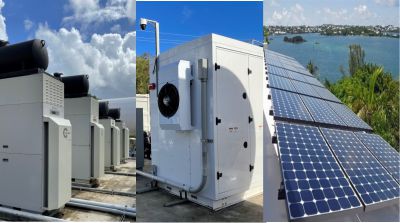
Federal and state incentives play a significant role in determining whether a microgrid project is financially viable. If you are evaluating a microgrid today, the single most important takeaway is this: incentives can reduce capital costs by 10 to 60 percent, but only if the system is designed to meet program requirements. A feasibility team must identify each incentive early, model eligibility accurately, and integrate compliance criteria into the technical design.
Many organizations miss incentives not because they are ineligible, but because they do not document emissions performance, thermal efficiency, or resilience contributions in the format required by federal or state programs. E-Finity often identifies incentive pathways during feasibility studies that customers did not previously consider, such as state-level CHP grants or reliability-driven funding available through energy resilience programs. Incentives are rarely automatic. They require strategic system design choices backed by data.
Federal and state programs reward microgrids that reduce emissions, support resilience, provide thermal efficiency, or improve grid stability. Incentives come in the form of tax credits, grants, low-interest financing, accelerated depreciation, and utility-administered rebates. To do this correctly, your engineering and financial teams must match the program requirements to the technologies in your microgrid such as CHP, storage, solar, or advanced controls. Incentive alignment is now a core design task, not a last step.
Understanding the Federal Incentive Landscape
Most federal incentives that apply to microgrids fall into four categories:
• Investment Tax Credits
• Production or performance-based incentives
• Grants for resilience, reliability, or clean energy
• Accelerated depreciation programs
To use these effectively, you must determine how your microgrid provides qualifying benefits. For example, CHP systems can qualify under energy efficiency provisions because they convert fuel into both electricity and usable thermal energy, significantly increasing total system efficiency. Battery storage can qualify when paired with renewable resources or when designed to support resilience.
To do this, analyze the federal program requirements early in the design process. Some require emissions modeling. Others require documentation of avoided grid stress. Others require thermal efficiency reports or heat recovery calculations. The key is matching the technical design to the program’s scoring structure so the microgrid receives full credit.
A meaningful stat: within the last five years, more than 500 million dollars in federal funding has been allocated across microgrid and distributed energy programs, most of which required documentation available only through a comprehensive feasibility study.
State-Level Incentives and Why They Vary
State incentives are often more impactful than federal incentives because they are tailored to regional grid constraints or emissions goals. Programs differ sharply between states, so you must map your microgrid design to the specific criteria in your jurisdiction. To do this, review programs that support:
• CHP performance
• Carbon reduction
• Peak load mitigation
• Resilience for critical infrastructure
• Renewable integration
• Natural gas efficiency programs
• Energy storage deployment
For example, a state with grid congestion issues may offer higher rebates for systems that provide peak reduction, while a state focused on emissions reduction may reward high-efficiency CHP systems with verified low NOx output. These nuances affect the recommended configuration of turbines, storage, and controls.
One reason state incentives vary is that some states allow microgrids to earn credits for the thermal portion of CHP output, while others credit only electrical savings. To do this correctly, have your feasibility team model electrical and thermal loads separately so you can claim every available efficiency benefit.
How CHP and Microturbines Qualify for Incentives
Many incentive programs evaluate the efficiency and emissions performance of CHP systems. Natural gas microturbines, which E-Finity deploys regularly, help customers qualify because they operate with very low NOx emissions and achieve high total energy efficiency when heat recovery is used. This combination aligns well with incentives targeting emissions reductions, fuel savings, and resilience.
To do this, document three key items during feasibility:
- Electrical efficiency and fuel use
- Thermal recovery output under real load
- Emissions profile under expected operating conditions
This data feeds directly into federal and state scoring systems. For example, in one E-Finity project serving a regional industrial facility, thermal recovery accounted for nearly 40 percent of the incentive value because the system reused exhaust heat for process loads. Without documenting thermal load profiles and recovery efficiency, the customer would have received only partial credit.
A CHP-focused microgrid often becomes more incentive-eligible when the thermal and electrical benefits are quantified together.
Incentives for Energy Storage, Resilience, and Grid Support
Storage incentives vary widely, but many states now offer rebates for batteries that support resilience, mitigate demand spikes, or integrate with renewable generation. To qualify, programs often require:
• Evidence of islanding capability
• Load support modeling during outages
• Demonstrated ability to reduce grid stress during peak periods
• Controls that optimize storage behavior
To do this, your feasibility study must model outage scenarios. Incentive reviewers want to see how long the system can sustain critical loads, how storage will cycle during a disturbance, and whether the microgrid improves grid stability rather than adding complexity. This is why battery-only systems often qualify for fewer funds when they cannot support long-duration outages proven through simulation.
Some incentives reward systems that provide grid services such as frequency regulation or demand response. These require advanced control strategies and real-time metering hardware. Modeling these capabilities early influences both design and eligibility.
Grants and Funding for Resilient Infrastructure
Many federal and state programs now prioritize resilience funding, especially for critical infrastructure like hospitals, public safety buildings, water treatment facilities, and government operations centers. To access these funds, your microgrid must demonstrate clear resilience value. That means documenting outage history, modeling worst-case scenarios, and quantifying the cost of downtime.
A common requirement is a resilience benefit-cost analysis, which assigns value to avoided outages. To do this, calculate the hourly economic impact of downtime at your facility and incorporate equipment redundancy modeling. Federal reviewers rely on these metrics to validate resilience claims.
Some resilience grants require full islanding capability and tested sequences for disconnection and resynchronization. CHP plus storage systems typically excel here because they offer continuous generation with fast stabilization.
Utility Incentives and Tariff-Driven Benefits
Some states allow utilities to offer rebates or tariff structures that support microgrids. These may include:
• Demand reduction payments
• Avoided capacity charges
• Performance payments for grid reliability services
• Rebates for energy efficiency improvements
• Reduced interconnection fees for qualifying systems
To use these effectively, your feasibility team must model how the microgrid affects your facility’s load profile at different times of day. For example, a CHP system operating during peak hours can significantly reduce both energy and demand charges. This financial benefit sometimes exceeds the value of one-time grants.
Utilities also administer programs supporting natural gas efficiency. Because microturbines convert fuel into both heat and electricity with high total efficiency, they frequently qualify when thermal load data is documented properly.
Structuring Your Microgrid to Maximize Incentive Value
Incentives do not reward generic system design. They reward systems that deliver quantifiable benefits. To do this, align your design strategy with program criteria:
• Use high-efficiency CHP where thermal loads permit
• Size batteries based on peak reduction or islanding needs
• Add renewable integration if it improves scoring
• Document emissions savings with validated engineering data
• Model outage sequences for resilience funding
• Provide dispatch logic showing how controls optimize performance
Programs often require that the microgrid operates in a specific manner. For example, a resilience grant may require that the system carry a minimum share of critical load for at least four hours without grid support. The feasibility study must verify this capability before the application is submitted.
As a rule, incentives increase when systems demonstrate:
• Higher efficiency
• Verified emissions reductions
• Strong resilience performance
• Reduced grid impact during peak times
Common Pitfalls That Reduce Incentive Eligibility
- Designing the microgrid before understanding incentive criteria
• Failing to document thermal loads, which reduces CHP credit
• Not modeling outages, which weakens resilience claims
• Using average load data rather than interval load data
• Missing deadlines for program pre-approval
• Assuming batteries alone will qualify for resilience funding
Recommendations Based on Your Situation
If you operate a mission-critical facility, prioritize resilience programs and require your feasibility team to model long-duration outages to strengthen your application.
If your facility has high thermal demand, focus on CHP-driven incentives that reward total system efficiency.
If you operate in a state with emissions-focused incentives, use microturbines’ low NOx profile to maximize credit.
If you have high demand charges, combine CHP with targeted storage to access both energy efficiency incentives and utility tariff benefits.
If you want, I can refine this further by adding state-by-state examples, solar coordination details, technical data tables, or E-Finity specific positioning language for your site.